General President Harold Schaitberger talks with IAFF members who have struggled and recovered from post-traumatic stress, one of the biggest but often untreated health issues among our ranks.
New NFPA 1710 Explainer Video
NFPA 1710 is the internationally accepted standard on minimum crew size and operational staffing for career fire departments.
Two exciting new data systems will ultimately help keep you safe, as well as give us the scientific data needed to hold communities accountable when it comes to public and fire fighter safety.
• Stronger and Safer – What happens at IAFF conventions affects us all
• Legislative Victories – Getting lawmakers to understand what we've known all along.
Whether it’s responding to a grisly accident, working to save the lives of others, being in a life-threatening situation or dealing with constant alarms, IAFF members face challenges that are virtually unknown to the public. The fact is, one in five fire fighters experiences post-traumatic stress at some point in their career.
“As I travel across our two great countries, I hear first-hand about the struggles some of us face with post-traumatic stress,” says General President Harold Schaitberger. “It’s a condition that affects our members at double the rate of the general population. But there have been few programs to address it.”
As more members are experiencing post-traumatic stress, the IAFF has undertaken an intensive effort to remove the stigma associated with behavioral health issues and provide resources for treatment and recovery.
Fire Fighters and Cancer Risks
Fire fighters are exposed every day to harsh toxins and chemicals that increase their risk for contracting some form of cancer. This emotional video, which features Boston, Massachusetts fire fighters, is a sobering reminder of the dangers of working in the fire service.
Occupational carcinogens include diesel exhaust, benzene, formaldehyde, asbestos and various combustion byproducts found in smoke. Exposures can occur through inhalation of smoke or diesel exhaust, and skin exposure can occur through contaminated personal protective equipment and turnout gear.
Remember these tips to help reduce your overall risk of exposure:
• Shower after returning from a fire
• Use SCBA during overhaul activities
• Perform gross field decontamination of PPE to remove as much soot and particulates as possible
• Clean your PPE (i.e., gloves, hood and helmet) after a fire
• Store PPE in dedicated storage areas and not in living quarters
The National Institute of Occupational Safety and Health (NIOSH) has ruled on an important issue involving SCBA cylinders.
In 2017, the U.S. Department of Transportation (DOT) approved Life Extension for carbon fiber composite SCBA cylinders beyond 15 years by issuing DOT Special Permit 16320. The DOT approval was based primarily on Modal Acoustic Emission (MAE) testing technology called Digital Wave’sLEx™. This has prompted a serious look at the testing. Manufacturers have issued letters warning that product warranties will be void if these extended life bottles are used on their SCBAs.
Developed by the IAFF in partnership with the U.S. Fire Administration (USFA) and supported by the U.S. Department of Homeland Security (DHS) Science and Technology Directorate, First Responders Group, Office for Interoperability and Compatibility, this second edition provides the fundamental awareness of radio communications technology and human resource issues, and covers basic radio technology, digital and analog technology, conventional and trunked radio systems, portable radios, system design and implementation, interoperability and spectrum licensing.
NFPA Issues Tentative Interim Amendment to Change PASS Alarm Sound
The National Fire Protection Association (NFPA) has issued a Tentative Interim Amendment (TIA) that requires PASS manufacturers to change the PASS alarm sound required in the current edition of NFPA 1982–2013 for PASS devices manufactured after December 21, 2016, to a new, more audible PASS alarm sound. This impacts stand-alone PASS devices and PASS that are integrated with SCBA.
The 2013 edition of the NFPA PASS standard implemented a standardized PASS alarm sound for all PASS devices. The purpose of the standard alarm sound was to improve fire fighter safety, interoperability on the fireground and the directionality of the PASS alarm sound. For fire departments in the United States and Canada, most PASS devices are integrated with SCBA.
In 2015, the NFPA committee responsible for PASS began to hear concerns from fire departments and fire fighters that the new standard alarm sound was harder to hear than the older PASS alarm sounds.
The Technical Committee on Electronic Safety Equipment has identified a more effective pattern of sound and has incorporated it into the Tentative Interim Amendment (TIA), which requires all PASS manufacturers to implement the new universal PASS alarm sound to comply with NFPA 1982, 2013 Edition. The Technical Committee believes this new sound is more audible than the current PASS alarm sound and further enhances fire fighter safety.
Nearly 10,000 Bottles of Eyewash Recalled, FDA Announced
The U.S. Food and Drug Administration (FDA) announced that Honeywell is voluntarily recalling one production lot of 32-ounce bottles of Eyesaline Eyewash solution, which is used for emergency eye rinsing after an injury.
Safety Alert: Columbus IAFF Member Injured When Tri-gate Appliance Fails On June 6, 2012, the Columbus Ohio Division of Fire, IAFF Local 67, experienced a near miss with a significant injury when the pressure relief device on a tri-gate waterway blew apart while under pressure. The incident occurred during a training exercise. A company officer was hit in the face with high pressure water and possibly some debris from the appliance.
FIREFIGHTER FATALITIES AND INJURIES:THE ROLE OF HEAT STRESS AND PPE
More firefighters die in the line of duty from heart attacks than from any other cause. And slips, trips and falls cause a large number of firefighter injuries. While the origins of heart attack and slip, trip and fall may appear unrelated, previous research suggests that heat stress may be a common causal factor in both heart attacks and slips, trips and falls. Research further suggests that one common, critical factor can potentially mitigate both of these injuries and fatalities: modified personal protective equipment (PPE).
CAUTION URGED WITH COMPOSITE FLOORS IAFC - December 4, 2006 -The Safety, Health and Survival Section recently became aware of a potential hazard to firefighter safety. They asked the IAFC to share the following notification with all members.
There have been several cases of firefighters falling through floors made of composite structural components and an even greater number of near-miss situations. This type of construction is being investigated as a contributing factor in a line-of-duty death.
There is a proliferation of engineered floor systems in residential occupancies across the United States. Many newer residential occupancies incorporate lightweight, engineered wood or composite structural components, including trusses, wooden I-beams and lightweight flooring systems. In most cases, these systems are structurally sound and designed to support the appropriate loads under normal conditions; however, they are likely to fail very quickly under fire conditions.
These components and systems are most often found in situations where applicable codes do not require any rated fire resistance between floor levels. They have much less inherent fire resistance than conventional wood joist floor systems and conventional wood decking. Remember – many codes do not require any fire resistance in residential floors!
In the several cases of firefighters falling through floors, those floors had been exposed to fire from below for relatively short periods. Sometimes the weakened area is relatively small and the damage is concentrated to the area immediately above the seat of the fire. Firefighters should pay special attention when entering above a basement fire, where the floor could have been weakened to the point that the weight of a firefighter could cause a localized failure, dropping the firefighter into a burning basement. This can occur with no indication of imminent failure from above.
Extreme caution should be exercised in any situation where entry is made above a basement fire. Conventional methods such as "sounding" ahead with a tool and checking for sponginess may not provide sufficient warning of a weakened floor. It is recommended to use a thermal image camera to sweep the floor for hot areas before entering and avoid any areas that appear to be hotter than the surrounding floors. Thick carpets or tile floors may compound the risk by making it even more difficult to detect hot spots.
In summary, members should consider the following regarding lightweight floor systems in residential occupancies:
Know the local codes that require fire resistive construction and/or limit combustible storage in unprotected basements.
Conduct pre-incident surveys of new housing developments to check the types of floor system being used.
Use extreme caution when fighting basement fires in all occupancies, including newer residential occupancies.
Work is being done by a number of our fire service partners to investigate this phenomenon and more information will be provided in the future. In the meantime, go to the following websites for more information:
FIREFIGHTER
RADIOS MAY FAIL DURING HIGH-TEMP FIRES
Firefighters sometimes find themselves fighting
blazes in temperatures as high as 500 degrees F (260 degrees C). Firefighter
gear and self-contained breathing apparatus can allow firefighters to safely
work for a limited time during these conditions. A recently released National
Institute of Standards and Technology (NIST) study,* however,
reveals that first responders can’t rely on their unprotected handheld
radios even in routine firefighting situations, much less in higher-temperature
fires, where good communications are especially crucial.
The NIST fire engineers tested three representative
portable radio models from three different manufacturers in a wind tunnel designed
to simulate thermal conditions at three different degrees of intensity that
firefighters are equipped to withstand--Thermal Class 1, with a maximum temperature
of 212 degrees F (100 degrees C) for 25 minutes; Thermal Class 2, with a maximum
temperature of 320 degrees F (160 degrees C) for 15 minutes: and Thermal Class
3, with a maximum temperature of 500 degrees F (260 degrees C) for 5 minutes.
Each of the radios tested listed their maximum operating temperatures as only
140 degrees F (60 degrees C).
One radio of the three samples would not transmit
or receive after 25 minutes at 212 degrees F though it did begin working after
a cooling off period. In another 15-minute experiment at 320 degrees F, one
radio went dead within 8.5 minutes. The other two radios suffered significant
performance problems from transmission and reception shutdown to signal degradation
or fluctuation. None survived the Thermal Class 2 test and cool down period.
Portable radios inside pockets or firefighter turnout
gear fared much better. All survived temperature tests at Thermal Class 1 and
Thermal Class 2 maximum heats and times. Pocket protected radios also survived
Thermal Class 3, but exposed cords, speakers and microphones did not, effectively
limiting the radios to Thermal Class 2 electronics. The NIST engineers suggest
that small design changes on the speaker/microphones and cords could allow all
the protected radios to reach a Thermal Class 3 rating.
New Construction Materials Being Used For Propane
Cylinders
CENTERS FOR DISEASE CONTROL &
PREVENTION OFFER TIPS ON PREVENTING HEAT RELATED ILLNESS
The Centers For Disease Control and Prevention
web site has tips on preventing heat related illness.
CHIEFS SHOULD REVIEW REQUIREMENTS
FOR HANDLING E85 FUELFIRE ENGINEERING.COM - March 22, 2006 - The
IAFC would like to alert its members to the requirements for handling E85 fuel,
an alternative fuel composed of 85 percent ethanol and 15 percent gasoline.
Recently, E85 has begun to appear in the Midwest, primarily the states of Illinois
and Minnesota.
According to the U.S. Department of Transportation
(DOT), fires involving E85 should be treated differently than traditional gasoline
fires, because E85 is a polar/water-miscible flammable liquid. E85 is highly
flammable, and will be easily ignited by heat, sparks or flames. The DOT recommends
following Guide 127 in the 2004 Emergency Response Guidebook.
According to the ERG2004, public safety should:
Call emergency response telephone number on
shipping paper first.
As an immediate precautionary measure, isolate
spill or leak area for at least 50 meters (150 feet) in all directions.
Structural firefighters’ protective clothing
will only provide limited protection.
For fires, public safety should:
Be cautioned that these products have a very
low flash point; use of water spray when fighting fire may be inefficient.
For small fires, use dry chemical, CO2, water
spray or alcohol-resistant foam.
For large fires:
Use water spray, fog or alcohol-resistant foam.
Use water spray or fog; do not use straight
streams.
Move containers from fire area if you can do
it without risk.
For fire involving tanks or car/trailer
loads:
Fight fire from maximum distance or use unmanned
hose holders or monitor nozzles.
Cool containers with flooding quantities of
water until well after fire is out.
Withdraw immediately in case of rising sound
from venting safety devices or discoloration of tank.
ALWAYS stay away from tanks engulfed in fire.
For massive fire, use unmanned hose holders
or monitor nozzles; if this is impossible, withdraw from area and let fire
burn.
For spills or leaks, public safety should:
ELIMINATE all ignition sources (no smoking,
flares, sparks or flames in immediate area).All equipment used when handling
the product must be grounded.
Do not touch or walk through spilled material.
Stop leak if you can do it without risk.
Prevent entry into waterways, sewers, basements,
or confined areas.
A vapor suppressing foam may be used to reduce
vapors.
Absorb or cover with dry earth, sand or other
noncombustible material and transfer to containers.
Use clean non-sparking tools to collect absorbed
material.
For large spills, public safety should:
Dike far ahead of liquid spill for later disposal.
Water spray may reduce vapor; but may not prevent
ignition in closed spaces.
For evacuation, public safety should:
For a large spill, consider downwind evacuation
for at least 300 meters (1,000 feet).
If tank, rail car or tank truck is involved
in a fire, ISOLATE for 800 meters (1/2 mile) in all directions; also consider
the evacuation for 800 meters (1/2 mile) in all directions.
For first aid, public safety should:
Move victim to fresh air.
Give artificial respiration if victim not breathing.
Administer oxygen if breathing is difficult.
Remove and isolate contaminated clothing and
shoes.
In case of contact with substance, immediately
flush skin or eyes with running water for at least 20 minutes; wash skin with
soap and water.
In case of burns, immediately cool affected
skin for as long as possible with cold water. Do not remove clothing if adhering
to skin.
Keep victim warm and quiet.
Ensure that medical personnel are aware of the
material(s) involved and take precautions to protect themselves.

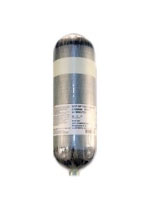 The National Institute of Occupational Safety and Health (NIOSH) has